
Why Leaf Guards Are Essential for Protecting Your Gutters This Fall
Fall is beautiful until the leaves land in the one place they can do the most damage: your gutters. A few handfuls of wet leaves may not seem like a serious problem, but once they mix with twigs, roof grit, pine needles, and rainwater, they can turn a working gutter system into a heavy, clogged trough.
That matters because gutters have one job. They move water away from the roof, siding, foundation, and landscaping. When they cannot do that job, water finds other paths. It can spill over the sides, back up under roof edges, stain siding, soften fascia boards, pool near the foundation, and create headaches that cost much more than basic prevention.
Leaf guards help solve that problem before it starts. They are often installed as part of a new gutter installation, but they can also be added to existing gutters if the system is still in good shape. For many homes, fall is the season when leaf guards prove their value the fastest.

Fall puts extra stress on your gutter system
Gutters deal with rain all year, but fall adds a different kind of strain. Leaves drop in waves, not all at once. A gutter that looks clear on Monday can be packed by the weekend after a windy day.
Once leaves settle inside the trough, they trap more debris. Small sticks, shingle granules, seed pods, and dirt collect around them. When rain arrives, the debris absorbs water and gets heavier. This weight can pull gutters away from the fascia or cause weak sections to sag.
A clogged gutter can create several problems at the same time:
Overflowing water
Water spills over the front or back edge instead of flowing to the downspout.
Added weight
Wet leaves, mud, and standing water can strain hangers and seams.
Poor drainage
Blocked downspouts force water to sit in the gutter or overflow near the home.
Rot and staining
Water that lingers against wood trim or siding can leave marks and cause decay over time.
Foundation concerns
Water dumping too close to the home can collect around the foundation.
The issue is not only the leaves you can see from the ground. Debris often gathers near outlets and downspout openings, where it blocks the most important part of the system. Once that happens, even a light rain can cause overflow.
What leaf guards actually do
Leaf guards are covers or screens installed over the top of gutters. Their purpose is simple: let water in while keeping most leaves and larger debris out.
They do not make a gutter system magical or maintenance-free. No guard can stop every grain of roof grit or every tiny seed. Still, a well-installed guard can greatly reduce the amount of debris that enters the gutter and lower the chance of a full blockage during peak leaf season.
Common leaf guard styles include:
Guard type | How it works | Best fit |
Mesh guards | Fine screening blocks leaves while rain passes through | Homes with mixed tree debris |
Perforated covers | Metal or vinyl covers use small holes to admit water | Many standard residential gutters |
Reverse curve guards | Water curves into the gutter while leaves slide off | Rooflines with steady rain flow |
Foam or brush inserts | Inserts sit inside the gutter and block larger debris | Short-term or simpler applications |
The right option depends on the roof pitch, tree coverage, gutter size, and how much debris usually falls around the home. For example, a property near pine trees may need a different guard than a home mostly surrounded by broadleaf trees. Pine needles are thin and can slip through larger openings, while maple and oak leaves create bulky clogs.
That is why the installation matters as much as the product. Leaf guards should fit securely, line up correctly with the roof edge, and allow steady water flow into the gutter. Poorly fitted guards can create new problems, such as water overshooting the gutter or debris catching along the edge.
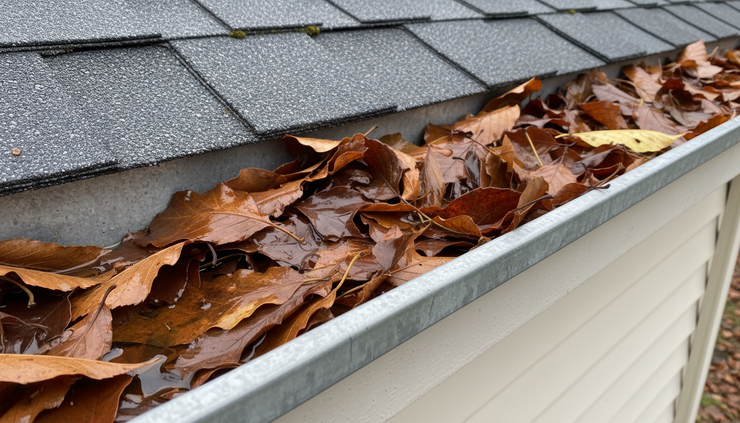
Leaf guards help prevent clogs before they become damage
A clogged gutter rarely causes a dramatic problem right away. The damage usually builds quietly.
At first, water spills over during heavier rain. Then the overflow starts hitting the same areas again and again. Soil erodes under the drip line. Mulch washes away. Stains appear on siding. The fascia behind the gutter stays damp longer than it should. Downspouts stop draining properly.
Over time, those small signs can point to larger issues.
They protect the fascia and roof edge
The fascia board sits behind the gutter and gives the system something solid to attach to. When gutters overflow or hold standing water, the fascia can stay damp. If the wood begins to soften, gutter fasteners may loosen.
Leaf guards reduce the chance of heavy debris sitting in the gutter for weeks. That helps the gutter drain faster and keeps excess moisture away from the roof edge.
They help keep water away from the foundation
Gutters are part of the home’s drainage system. If water pours over the side instead of moving through the downspout, it often lands too close to the house. During repeated storms, that water can collect near the foundation.
Leaf guards support better drainage by helping water reach the downspouts. A clear path matters most during fall storms, when gutters may be handling rain and falling leaves at the same time.
They reduce gutter weight
A gutter filled with wet leaves is much heavier than a clean one. Add standing water, and the system can strain under the load. Weak hangers, old seams, and poorly pitched sections are especially vulnerable.
Leaf guards keep most of that bulk out of the gutter. Less debris means less weight, which helps the system stay properly aligned.
They limit pests and organic buildup
Leaves and damp debris create a comfortable place for insects and other pests. The longer debris sits, the more it breaks down into sludge. That sludge can clog outlets and hold moisture against metal or wood components.
Leaf guards make it harder for that buildup to start. The gutters may still need periodic cleaning, but the work is often lighter and less frequent.
Leaf guards work well with new gutter installation
If the gutters are old, sagging, leaking, or undersized, adding guards alone may not solve the problem. A damaged gutter system still needs repair or replacement before it can protect the home.
That is why leaf guards are a smart part of a full gutter installation service. When installed with new gutters, the whole system can be planned together. The gutter size, pitch, downspout placement, hangers, and guards can all work as one system.
A proper gutter installation should address:
Gutter size for the home’s roof area
Slope so water moves toward downspouts
Secure fastening to handle heavy rain
Downspout placement and discharge points
Compatibility with the chosen leaf guard system
This prevents the common problem of adding a guard to a gutter that already has drainage issues. If the gutter does not slope correctly, water may still sit inside. If downspouts are too few or placed poorly, guards will not fix the bottleneck.
For homes that need new gutters, installing leaf guards at the same time is often the cleanest route. The finished system looks more polished, performs better, and avoids the need for a second installation visit later.

Leaf guards can also be added to good existing gutters
Not every home needs new gutters. If the existing system is in solid shape, leaf guards may be added as an upgrade.
A good candidate for add-on leaf guards usually has gutters that are:
Firmly attached to the fascia
Free of major sagging
Properly pitched toward the downspouts
Not heavily rusted, cracked, or separated
Large enough to handle typical rainfall from the roof
Before installing guards, the gutters should be cleaned and inspected. Any leaks, loose fasteners, or pitch problems should be corrected first. Installing guards over a problem can hide it, but it will not fix it.
This is especially important in fall. Many homeowners think about leaf guards after dealing with repeated clogs. That timing makes sense, but the installation should still start with a check of the current gutter condition.
If the gutters are strong, leaf guards can extend their usefulness and reduce seasonal maintenance. If the gutters are failing, replacement may be the better long-term choice.
Leaf guards reduce maintenance, but they do not eliminate it
One of the biggest misunderstandings about leaf guards is that they make gutters maintenance-free. They do not.
Leaves can still collect on top of guards. Pine needles may lodge in mesh openings. Small particles can still wash through. Overhanging branches can drop twigs that need to be brushed away.
The difference is that maintenance becomes more manageable. Instead of scooping out heavy, wet debris from inside the gutter, many systems only need a light clearing on top and an occasional check at downspouts.
A practical maintenance routine looks like this:
Check gutters and guards after the heaviest leaf drop.
Look for water spilling over during rain.
Clear visible debris from the top of the guards.
Make sure downspouts discharge away from the home.
Schedule a professional inspection if gutters sag, leak, or overflow.
This routine is much easier than reacting to a full blockage during a storm. It also helps catch small issues before they become expensive repairs.
Signs your gutters need attention before fall gets worse
Fall weather can reveal weak points quickly. If any of these signs show up, the gutter system needs attention:
Water pours over the front edge during rain.
Gutters pull away from the roofline.
Downspouts drain slowly or not at all.
Soil or mulch washes away below the gutters.
Stains appear on siding beneath the roof edge.
Plants or weeds grow inside the gutter.
Gutters sag in the middle or hold standing water.
These signs do not always mean the whole system needs replacement. Sometimes a cleaning, adjustment, or guard installation is enough. In other cases, the gutters may be too worn to keep repairing.
The key is to deal with the issue before winter. In colder areas, trapped water can freeze, adding more weight and making existing problems worse. Even in milder areas, fall and winter rain can overwhelm clogged gutters and send water where it does not belong.
The best time to install leaf guards is before the gutters clog
Leaf guards are most useful when they are installed before the worst leaf drop or before repeated clogs cause strain. Waiting until gutters are packed with debris can turn a simple upgrade into a repair project.
If the gutters are new or still in good condition, adding guards now can help protect them through the rest of fall and into winter. If the gutters are damaged, a new gutter installation with leaf guards can give the home a stronger drainage system from the start.
Either way, the goal is the same: keep water moving away from the home.
Professional installation also helps avoid common mistakes. Guards must match the gutter style, fit the roofline, and handle the type of debris that falls around the property. A product that works well on one home may not be the right choice for another.
For homeowners planning gutter work, Bana Roofing and Construction offers gutter installation services that can include leaf guards as part of a new system or as an add-on for gutters that are still performing well. To learn more, visit their gutter installation service page.

Protect the gutters before fall debris takes over
Leaf guards are a simple upgrade with a clear purpose. They help keep leaves out, reduce clogs, limit excess gutter weight, and support better drainage during one of the messiest seasons of the year.
They are not a substitute for a properly installed gutter system, and they still need occasional maintenance. But when paired with sound gutters and good drainage, they can protect the roofline, siding, foundation, and landscaping from avoidable water problems.
Fall leaves will keep falling. The right gutter system should be ready for them.


Comments